
For Florida homeowners, controlling energy costs can feel like a constant uphill climb. Air conditioners run most of the year, humidity rarely gives a break, and even small thermostat adjustments can cause noticeable spikes in the power bill. As smart thermostats and connected home technology become more common, many homeowners are curious—but skeptical—about whether these tools actually help in Florida’s climate or simply add another layer of complexity.
The answer is clear: smart thermostats can absolutely help tame Florida power bills, but only when they’re used correctly. Without thoughtful schedules, humidity-aware settings, and proper system compatibility, a smart thermostat won’t save energy—and in some cases, it can quietly increase usage.
Snyder Air Conditioning, Plumbing & Electric works with Florida homeowners every day who want better control over comfort and cooling costs without sacrificing livability. This guide explains how smart thermostats really work, which features matter most in Florida, how to build effective schedules for different lifestyles, and how to avoid common mistakes that undermine savings.
Why Thermostat Strategy Matters More in Florida Than Almost Anywhere Else
In many parts of the country, heating dominates utility bills. In Florida, cooling does. Homes may rely on air conditioning for eight, nine, or even ten months of the year, with peak usage stretching from late spring through early fall. Unlike cooler climates, Florida homes rarely get a true overnight cooldown, meaning AC systems often run late into the evening.
This reality changes everything about thermostat strategy.
In Florida:
- Small inefficiencies repeat every day for months
- Poor schedules compound into large annual costs
- Comfort depends on humidity control, not just temperature
- Runtime patterns matter more than short heat spikes
A smart thermostat’s biggest advantage isn’t fancy screens or app control—it’s the ability to smooth out runtime, reduce unnecessary cooling, and support better humidity control over long periods.
What Actually Makes a Thermostat “Smart”
Many homeowners assume a smart thermostat is simply a programmable thermostat with Wi-Fi. In reality, the value lies in how the device responds dynamically to conditions instead of relying on static settings.
A true smart thermostat can:
- Adjust cooling based on occupancy patterns
- Respond to outdoor weather conditions
- Provide feedback on energy usage
- Coordinate with advanced HVAC equipment
- Reduce unnecessary runtime automatically
However, a smart thermostat does not think for you. It requires correct setup, realistic schedules, and alignment with Florida’s climate to deliver real benefits.
Smart Thermostat Features That Truly Matter in Florida Homes
Not every advertised feature delivers value in a hot, humid climate. These are the features that consistently make a difference for Florida homeowners.
Geofencing: Cooling That Follows Your Schedule
Geofencing uses your smartphone’s location to determine whether the home is occupied. When everyone leaves, the thermostat allows temperatures to drift upward. When someone heads home, it restores comfort automatically.
In Florida, geofencing helps:
- Prevent all-day cooling of empty homes
- Reduce midday runtime during peak utility rates
- Restore comfort without extreme temperature swings
This is particularly useful for commuters, families with predictable school schedules, and households with regular work hours.
Important caveat: Geofencing works best when household members consistently carry their phones and allow location access. In multi-person households, setup matters.
Learning Schedules vs Manual Programming
Some thermostats learn your habits automatically, while others rely on schedules you program yourself.
In Florida:
- Learning schedules work best for stable routines
- Manual schedules are often better for shift work, hybrid schedules, or seasonal changes
The goal is consistency. Florida systems perform best when they run steadily, not when they’re constantly reacting to unpredictable changes.
Energy Reports: Turning Data Into Action
Smart thermostats provide energy reports showing:
- Daily and weekly runtime
- Peak usage times
- Weather-related demand increases
- Long-term trends
For Florida homeowners, these reports help identify:
- Overcooling during low-occupancy hours
- Inefficient afternoon settings
- Excessive recovery runtimes
The reports don’t save energy on their own—but they reveal habits that quietly drive up bills.
Integration With Dehumidification and Zoning
Advanced systems allow thermostats to:
- Control whole-home dehumidifiers
- Manage zoned HVAC systems
- Coordinate with variable-speed compressors
This integration is especially important in Florida, where humidity control is just as important as temperature. When thermostats and dehumidifiers work together, comfort improves without lowering temperature.
Why Humidity Control Is Central to Smart Thermostat Success
One of the biggest reasons smart thermostats succeed—or fail—in Florida is how they handle humidity.
High humidity makes rooms feel warmer, stickier, and less comfortable even at lower temperatures. Many homeowners respond by lowering the thermostat, which increases energy use without solving the real problem.
Smart thermostats help by:
- Supporting longer, steadier cooling cycles
- Reducing short cycling that limits moisture removal
- Coordinating with dedicated dehumidification
When humidity is controlled properly, homeowners often find they can raise their thermostat setting and still feel comfortable.
Why Lowering the Thermostat Isn’t a Smart Cooling Strategy
In Florida, lowering the thermostat is often the least effective way to improve comfort.
Problems caused by aggressive temperature drops include:
- Shorter AC cycles that remove less moisture
- Cold but clammy indoor air
- Higher energy consumption
- Increased strain on HVAC equipment
Smart thermostats work best when paired with moderate, consistent temperature targets rather than drastic swings.
Florida-Specific Smart Thermostat Schedules That Actually Work
Generic thermostat schedules rarely work well in Florida. Below are expanded, realistic examples tailored to common Florida lifestyles.
Florida Commuter Household
Profile
- Home empty most weekdays
- Highest cooling demand mid-afternoon
- Wants comfort immediately upon returning
Effective Schedule
- 6:00–8:00 AM: 74–75°F
- 8:00 AM–4:30 PM: 78–80°F
- 4:30–10:00 PM: 74–75°F
- Overnight: 75–76°F
Why this works:
- Reduces cooling during peak absence
- Avoids extreme recovery cycles
- Maintains humidity control
Work-From-Home Household
Profile
- Occupied most of the day
- Internal heat from electronics
- Needs steady comfort
Effective Schedule
- Morning–Afternoon: 75–76°F
- Late Afternoon: 74–75°F
- Overnight: 75–76°F
Why this works:
- Supports longer, steadier cycles
- Improves humidity removal
- Prevents overcooling
Multi-Generational or Stay-at-Home Household
Profile
- Someone home most of the time
- Different comfort preferences
- Higher indoor activity
Best approach:
- Maintain a steady baseline (75–76°F)
- Use zoning or room-specific adjustments where possible
- Avoid aggressive setbacks
Consistency matters more than constant adjustments.
Seasonal or Part-Time Florida Residents
Profile
- Home vacant for extended periods
- Concerned about humidity and mold
- Wants protection, not comfort
Recommended Strategy
- Away: 80–82°F with humidity control enabled
- Arrival: Gradual cooldown
- Occupied: 75–77°F
This approach protects the home without excessive runtime.
Why Extreme Temperature Swings Backfire in Florida
Many homeowners assume bigger setbacks equal bigger savings. In Florida, the opposite is often true.
Large temperature swings cause:
- Long recovery runtimes
- Higher peak power draw
- Reduced dehumidification
- Greater wear on compressors
Smart thermostats save more energy through small, steady adjustments than dramatic swings.
Smart Thermostats and Variable-Speed HVAC Systems
Modern Florida homes increasingly use variable-speed HVAC systems.
Smart thermostats help these systems:
- Run longer at lower output
- Maintain stable indoor conditions
- Improve humidity control
However, compatibility matters. Not every smart thermostat works properly with variable-speed equipment. Professional selection and configuration are critical.
Zoning Systems + Smart Thermostats
Zoning divides a home into multiple areas, each with its own thermostat.
Benefits include:
- Cooling only occupied spaces
- Eliminating hot and cold spots
- Reducing unnecessary runtime
Smart thermostats make zoning more effective by automating adjustments instead of relying on manual changes.
Where Smart Thermostats Cannot Help
Smart thermostats cannot:
- Fix leaky ductwork
- Correct oversized systems
- Replace insulation improvements
- Solve humidity problems alone
They work best when the HVAC system itself is properly designed and maintained.
Common Smart Thermostat Mistakes Florida Homeowners Make
Even tech-savvy homeowners make mistakes that increase energy use:
- Setting temperatures too low
- Using schedules designed for cooler climates
- Ignoring humidity-related settings
- Constantly overriding automation
- Installing without checking system compatibility
Technology only saves money when it’s aligned with climate, equipment, and habits.
Why Professional Setup Makes a Measurable Difference
Professional setup ensures:
- Correct wiring and configuration
- Proper humidity settings
- Accurate sensor placement
- Compatibility with HVAC equipment
This is especially important in homes with:
- Zoning
- Whole-home dehumidifiers
- Variable-speed systems
Improper setup can negate most benefits of a smart thermostat.
How Smart Thermostats Reduce Power Bills Over Time
Smart thermostats reduce energy use by:
- Eliminating unnecessary runtime
- Preventing overcooling
- Supporting humidity control
- Encouraging better habits
Savings aren’t always dramatic month-to-month, but over Florida’s long cooling season, they add up significantly.
Is a Smart Thermostat Worth It for Your Florida Home?
Smart thermostats deliver the most value when:
- AC runs most of the year
- Schedules are relatively predictable
- Humidity is a comfort concern
- Homeowners engage with the features
They are less effective when:
- Comfort issues stem from duct or insulation problems
- Schedules change constantly
- HVAC systems are improperly sized
Why Florida Homeowners Trust Snyder Air Conditioning, Plumbing & Electric
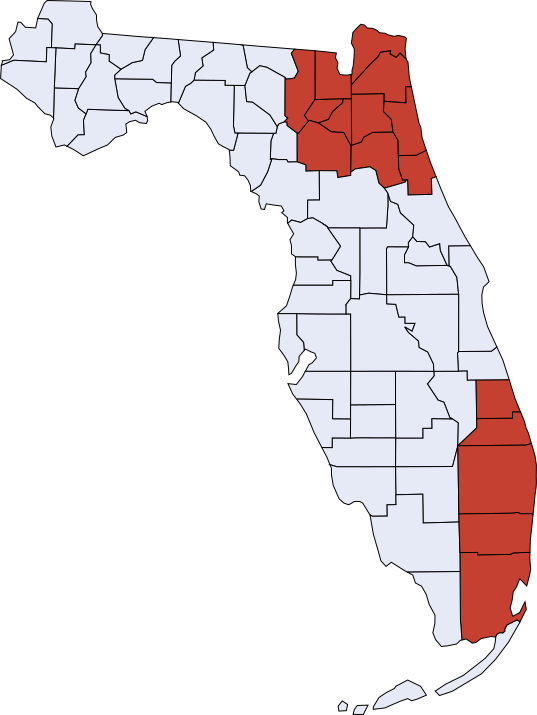
For more than 50 years, Snyder Air Conditioning, Plumbing & Electric has helped homeowners across Jacksonville and Northeast Florida use technology in ways that actually improve comfort and efficiency—not just add gadgets.
We help homeowners:
- Choose compatible smart thermostats
- Build realistic Florida-friendly schedules
- Integrate humidity and zoning controls
- Avoid costly setup mistakes
Smarter Technology, Smarter Cooling, Lower Bills
In Florida, taming power bills isn’t about setting the thermostat lower—it’s about running your system smarter. With the right smart thermostat features, schedules, and professional setup, homeowners can reduce energy costs without sacrificing comfort.
Call Snyder Air Conditioning, Plumbing & Electric today to schedule smart thermostat installation or optimization and start getting more value from the technology already in your home.